
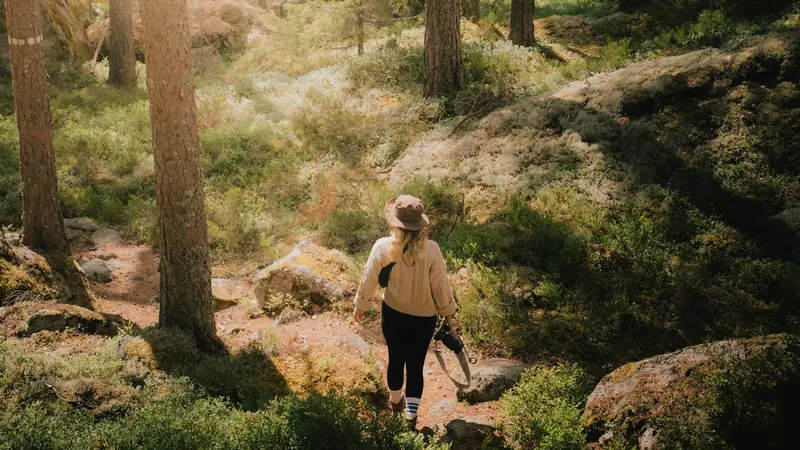
- Spending time in natural settings, such as parks, woods, gardens or near water, is linked with lower stress and better mood.
- Large studies suggest that around two hours a week outdoors in nature is associated with better health and well-being.
- You do not need a wilderness trip: local parks, tree-lined streets, gardens and even a view from a window can help.
- Nature is a helpful support for mental health, but it is not a replacement for professional care when symptoms are serious.
Many people notice that they feel calmer after a walk in the park, an afternoon in the garden or a few minutes watching the sea. That feeling is not just in our heads. A growing body of research suggests that time in natural surroundings can ease stress, improve mood and help us think more clearly. The good news is that the benefits do not depend on hiking boots or long trips. Small, regular doses of green (plants and trees) and blue (water) spaces close to home appear to make a difference.
Why nature may be good for the mind
Researchers have a few complementary explanations. One, known as attention restoration theory, was developed by psychologists Rachel and Stephen Kaplan. It suggests that busy, demanding environments, like crowded streets, screens and constant notifications, use up our ability to focus. Natural scenes hold our attention gently and effortlessly, such as leaves moving in the wind or clouds drifting by, which gives our mental "focus muscles" a chance to recover.
A related idea, stress reduction theory, proposes that calm natural environments quickly signal safety to the body, helping to lower physical signs of stress. Nature also tends to bring other benefits along with it: outdoor time usually involves some movement, daylight exposure and, often, time with other people, all of which are good for mental health in their own right.
What the research says
Several well-known studies support the link between nature and well-being:
- The "two hours a week" study. A 2019 study of nearly 20,000 people in England, published in Scientific Reports, found that people who spent at least 120 minutes a week in natural settings were more likely to report good health and high well-being than those who spent no time in nature. It did not seem to matter whether the time came in one long visit or several shorter ones.
- Walking and rumination. In a 2015 Stanford study, people who took a 90-minute walk in a natural area reported less rumination, the habit of dwelling on negative thoughts, than people who walked along a busy road. Brain scans also showed reduced activity in a region linked with rumination.
- Short doses count. A 2019 study found that spending 20 to 30 minutes in a place that felt like nature to participants was linked with a meaningful drop in the stress hormone cortisol.
- Even a view helps. In a classic 1984 study, hospital patients recovering from surgery whose windows looked out on trees had slightly shorter stays and needed fewer strong painkillers than similar patients whose windows faced a brick wall.
It is worth keeping these findings in perspective. Many studies are small or show associations rather than proof of cause and effect, and people who are already healthier may find it easier to get outside. Still, the overall pattern is consistent enough that many doctors and health services now encourage time outdoors as part of looking after mental health, and some even offer "nature prescriptions."
Forest bathing and mindful time outdoors
In Japan, the practice of shinrin-yoku, or "forest bathing," was promoted in the 1980s as a way to relieve stress. It simply means spending unhurried time among trees and paying attention through your senses: the smell of pine, the sound of birds, the feeling of cool air on your skin. Studies of forest bathing have reported lower stress and better mood afterward, though many of them are small. You can try a version of it anywhere with a few trees. Walk slowly, leave your phone in your pocket and notice five things you can see, hear or feel. This pairs naturally with the techniques in our guide to mindfulness for beginners.
Simple ways to get more nature into your week
You do not have to live near a national park to benefit. Some easy ideas:
- Take a green route. Walk or cycle through a park on the way to work or the shops, even if it adds a few minutes.
- Eat lunch outside. A bench under a tree or near a fountain turns a routine break into a small restorative pause.
- Get your hands in the soil. Gardening, tending a balcony planter or joining a community garden combines nature, gentle movement and a sense of achievement.
- Bring nature indoors. Houseplants, fresh flowers and a seat by the window are modest but pleasant ways to add green to your day.
- Move outdoors. If you exercise, try taking it outside sometimes. Our article on exercise and mood explains why movement helps too.
- Make it social. A weekend walk with a friend or a local walking group adds connection, which helps combat loneliness.
- Catch the morning light. Time outside early in the day can support your body clock and sleep, and may be especially helpful in darker months for people prone to seasonal affective disorder.
Start small. Ten or fifteen minutes a few times a week is a realistic beginning, and you can build from there toward the two hours or so that research suggests.
Staying safe and comfortable
A little preparation makes outdoor time more enjoyable. Dress for the weather, wear sunscreen in strong sun, carry water and check for ticks after walking through long grass or woods. If you head somewhere remote, let someone know where you are going. If mobility, health or safety concerns make getting outside difficult, a window view, indoor plants or recordings of natural sounds can still offer some calm.
When to seek more help
Time in nature can be a valuable part of looking after yourself, but it is not a treatment for mental health conditions on its own. If you have felt persistently low, hopeless or uninterested in things for two weeks or more, or if worry, panic or poor sleep is interfering with daily life, please talk to a doctor or mental health professional. Our pages on depression and anxiety describe common signs, and our guide to choosing a therapist can help you take the next step. Many people find that outdoor time works well alongside therapy or medication rather than instead of it.
If you ever have thoughts of harming yourself or ending your life, please reach out right away. In the US, call or text 988 to reach the Suicide & Crisis Lifeline, any time, day or night.
Sources
Key claims on this page were checked against these sources. See our editorial policy for how we research and update content.
- Spending at least 120 minutes a week in nature is associated with good health and wellbeing — White MP et al., Scientific Reports, 2019
- Nature experience reduces rumination and subgenual prefrontal cortex activation — Bratman GN et al., PNAS, 2015
- Urban nature experiences reduce stress in the context of daily life based on salivary biomarkers — Hunter MR et al., Frontiers in Psychology, 2019
- View through a window may influence recovery from surgery — Ulrich RS, Science, 1984
Medical disclaimer: This article is for general educational purposes and is not a substitute for professional medical advice, diagnosis or treatment. Always consult a qualified health professional about your situation. See our full disclaimer.